

For more than two decades, businesses have focused on Search Engine Optimization (SEO) to improve visibility in Google and other search engines. The goal was simple: rank higher, earn more clicks, and drive more traffic.
Today, however, the way people search for information is changing.
Instead of typing keywords into Google and clicking through multiple results, users are increasingly turning to AI-powered tools like ChatGPT, Google AI Overviews, Gemini, Claude, and Perplexity to get direct answers. These platforms don’t simply display a list of links, they generate responses by gathering, analyzing, and synthesizing information from multiple sources.
This shift has given rise to a new discipline: AI Search Optimization (AISO).
While traditional SEO remains critical, businesses must now think beyond rankings and consider how to position their content to be included in AI-generated answers.
What Is AI Search Optimization?
AI Search Optimization is the practice of making your website, content, and brand more likely to be cited, referenced, or included in responses generated by AI-powered search tools and large language models (LLMs).
Instead of optimizing solely for a position on a search engine results page (SERP), AI Search Optimization focuses on increasing the likelihood that AI systems will use your content when answering a user’s question.
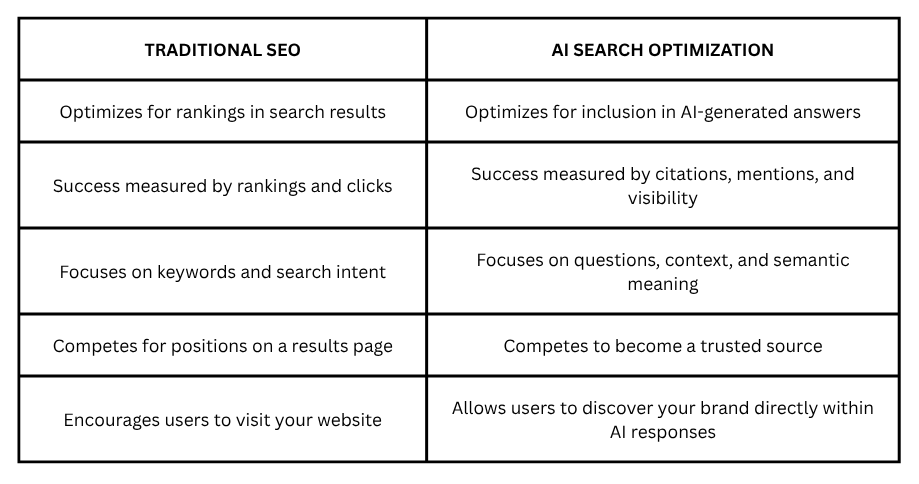
In other words, Traditional SEO aims to earn a click while AI Search Optimization aims to earn a citation. For example, if someone asks ChatGPT: “What are the best CRM platforms for small businesses?”
The AI may generate a summary comparing HubSpot, Salesforce, Zoho, and Pipedrive while citing sources it considers authoritative and trustworthy.
If your content is one of those cited sources, your brand gains visibility, even if the user never performs a traditional Google search.
Why AI Search Matters
AI-powered search experiences are becoming a major part of how consumers and businesses discover information.
Platforms like Google AI Overviews, ChatGPT, Gemini, and Perplexity are increasingly providing direct answers instead of requiring users to click through multiple websites. As a result, visibility is no longer measured solely by rankings and traffic. It is also measured by whether your brand is included in the answers themselves.
For marketers, this means the definition of “being found online” is expanding.
AI Search Optimization vs. Traditional SEO
Although AI Search Optimization and SEO share many foundational principles, they are not identical.
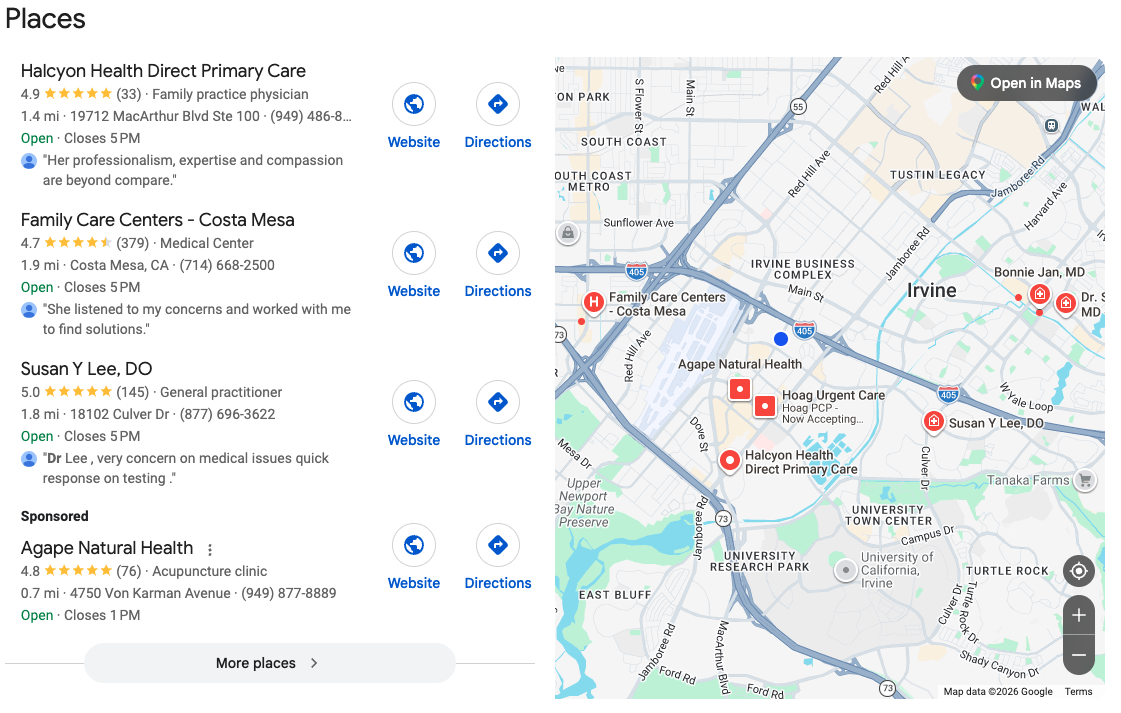
SEO example: Primary Care Doctor Near Me
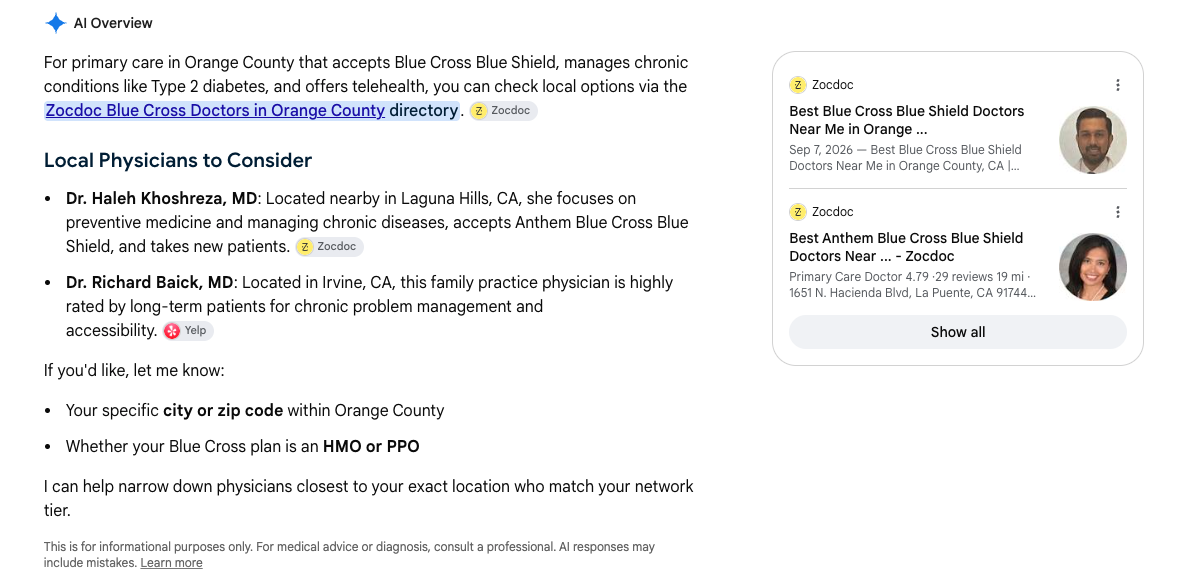
AISO example: I recently moved to Orange County, CA and need a primary care physician who accepts Blue Cross Blue Shield, has experience managing Type 2 diabetes, offers telehealth appointments, and is accepting new patients. Who should I consider?
Google itself has stated that many of the same SEO best practices still apply to generative AI (AI that creates original content based on user prompts) Search experiences because AI-generated responses are often grounded in traditional search systems and content indexes.
The difference is that AI systems evaluate information differently. They prioritize content that is easy to understand, easy to extract, highly relevant, and supported by trustworthy signals.
How AI Search Engines Find and Use Content
Most AI search systems follow a process similar to this:
- Retrieve Information – The AI searches available sources for information related to a user’s question.
- Analyze and Compare Sources – It evaluates multiple pieces of content to determine which sources are most helpful, authoritative, and relevant.
- Generate a Response – The AI combines information from several sources into a single answer.
- Cite Sources – Many AI platforms include citations or links to the sources used to generate the response.
This means your content must do more than rank, it must be structured in a way that AI systems can easily understand and reference.
How to Optimize for Inclusion in AI Answers
If you want your content to appear in AI-generated responses, focus on creating information that is useful for both humans and machines.
Answer Questions Clearly and Directly
AI systems favor content that provides clear, concise answers. Instead of burying key information several paragraphs into a page, provide direct answers near the beginning of sections. For example:
Less Effective: “CRM platforms have evolved significantly over the years and offer many features for businesses of all sizes…”
More Effective: “A CRM is software that helps businesses manage customer relationships, track interactions, and improve sales and marketing performance.”
Direct definitions and straightforward explanations are easier for AI systems to extract and cite.
Structure Content Logically
Well-organized content is easier for AI systems to interpret. Best practices include:
- Descriptive H2 and H3 headings
- Numbered steps
- Bullet lists
- FAQ sections
- Summary boxes
- Tables and comparison charts
These structures help AI identify the most important information quickly.
Build Topical Authority
AI systems look for sources that demonstrate expertise. Rather than publishing isolated articles, create clusters of related content that establish your authority on a topic.
For example, a digital marketing agency might publish content about:
- SEO
- AI Search Optimization
- Content Marketing
- Paid Search
- Marketing Analytics
- CRM Integration
The more comprehensive your coverage, the more likely AI systems are to recognize your expertise.
Use Original Data and Unique Insights
AI models frequently encounter the same information repeated across hundreds of websites. Original research, proprietary data, customer insights, and unique perspectives help your content stand out.
Consider including:
- Industry benchmarks
- Survey results
- Internal case studies
- Proprietary statistics
- Expert commentary
Unique information increases the likelihood that AI systems will reference your content instead of a competitor’s.
Strengthen Your Technical SEO Foundation
AI Search Optimization does not replace technical SEO. Your website should still follow SEO best practices, including:
- Fast page speeds
- Mobile responsiveness
- Crawlable content
- Clear site architecture
- Internal linking
- Schema markup
Google has explicitly stated that strong SEO fundamentals remain the foundation for visibility in generative AI experiences.
Create Helpful, People-First Content
The biggest misconception about AI Search Optimization is that it requires a completely new content strategy.
In reality, Google’s guidance emphasizes creating helpful, reliable, people-first content that satisfies user intent. Pages that genuinely answer questions and solve problems are more likely to perform well in both traditional search and AI-generated experiences.
How to Measure AI Search Visibility
Unlike traditional SEO, AI Search visibility isn’t measured solely by rankings.
Emerging metrics include:
- Brand mentions in AI responses
- Citation frequency
- Share of voice across AI platforms
- Referral traffic from AI tools
- Assisted conversions from AI-driven visits
As AI search continues to evolve, marketers will increasingly need to track both search rankings and AI-generated visibility.
The Future of Search Is Both SEO and AI Search Optimization
Despite the headlines, AI Search Optimization is not replacing SEO. Instead, it’s expanding what it means to be discoverable online.
Traditional SEO helps users find your website through search engines. AI Search Optimization helps AI systems understand, trust, and reference your content when generating answers.
The organizations that succeed in the coming years will be those that focus on both: building a strong SEO foundation while creating authoritative, structured, and genuinely helpful content that AI systems can confidently cite.
The goal is no longer just to rank. It’s to become the source AI chooses to trust.